late nineteenth century to 1920
Political Utopia Established
The United States develops into a militarily fortified, centralized, prosperous republic after wars, social reforms, immigration restrictions, and institutional expansion. [New York City](entity:location-recall-location-new-york-city-65df0a129d4c) is rebuilt with improved streets, parks, transport, culture, and public works, while Europe collapses into [Anarchy](entity:state-recall-state-anarchy-8c188f394100) and Russia subdues the unstable continental powers.
before the main action
The King in Yellow Spreads
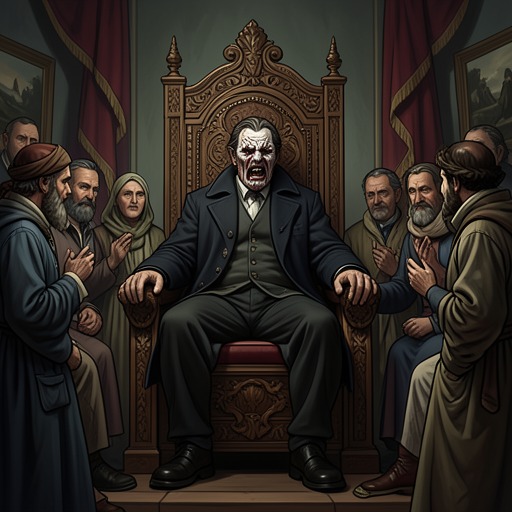
The publication of [The King in Yellow](entity:character-recall-character-the-king-in-yellow-069ac20e6338) produces an international literary panic. Governments confiscate translations, churches and newspapers condemn it, and readers are driven toward terror or mental illness by its apparently innocent opening and devastating second act
four years before April 1920
Hildred’s Fall and Confinement
[Hildred Castaigne](entity:character-recall-character-hildred-castaigne-f7ab2010ba39) falls from a horse and is mistakenly judged mentally unsound by [Dr. John Archer](entity:character-recall-character-dr-john-archer-a39086f4b0ea). He is confined in Archer’s private asylum, though he believes his mind remains superior to the doctor’s, and he later leaves after being declared cured.
during his convalescence, four years before the opening scene
Hildred Reads the Play
During recovery, Hildred reads [The King in Yellow](entity:character-recall-character-the-king-in-yellow-069ac20e6338). He nearly burns it after the first act, but glimpses the opening of the second and finishes the book, becoming obsessed with [Carcosa](entity:location-recall-location-carcosa-6d4efe655bfa), the [Lake Hali](entity:location-recall-location-lake-hali-71624af7af91), the King’s pallid mask, and what he understands as a revelation of his own imperial destiny.
April 1920
Anti-Suicide Laws Repealed
The United States repeals its [laws prohibiting suicide](entity:rule-recall-rule-laws-prohibiting-suicide-c61768f7411b), formally recognizing a person’s right to end an intolerable life. The policy is presented as a social benefit, foreshadowing a society in which death is administered by the state rather than treated solely as a private or religious matter.
April 13, 1920
First Lethal Chamber Opens
The first Government [Lethal Chamber](entity:location-recall-location-lethal-chamber-df2319d4edc3) opens on the south side of [Washington Square](entity:location-recall-location-washington-square-97e6502f714f). Military and civic authorities stage a solemn inauguration, declaring that anyone unable to endure life may seek painless death there.
April 13, 1920
Hildred Visits Hawberk
After witnessing the opening ceremony, Hildred visits [Hawberk](entity:character-recall-character-hawberk-69833c9c4dca)’s armourer’s shop. He is fascinated by the music of hammer and steel, while [Constance Hawberk](entity:character-recall-character-constance-hawberk-6c1732b88e4d)’s disappointment reveals that she expected to see Hildred’s cousin Louis rather than Hildred.
April 13, 1920
Hildred Exposes the Armour Secret
Hildred tells [Hawberk](entity:character-recall-character-hawberk-69833c9c4dca) that [Mr. Wilde](entity:character-recall-character-mr-wilde-832c12e24772) has identified the missing tassets and cuissard of the Prince’s Emblazoned armour in a junk-filled garret. He also repeats Wilde’s claim that Hawberk is the Marquis of Avonshire and Constance his daughter, unsettling both armourer and girl.
April 13, 1920
The Repairer’s Ledger
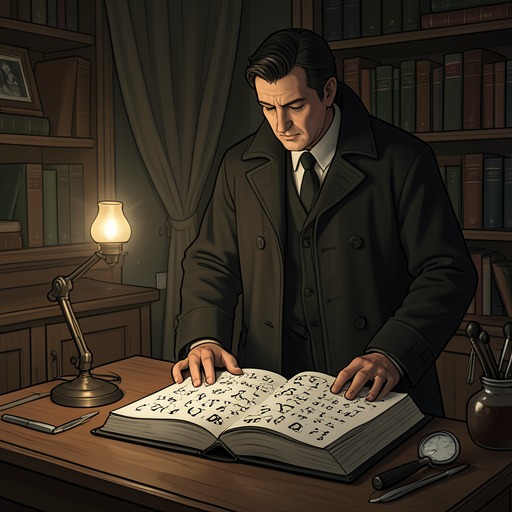
Hildred enters [Mr. Wilde](entity:character-recall-character-mr-wilde-832c12e24772)’s fortified room and studies his ledger of clients whose reputations he repairs through intimidation. Wilde claims that hundreds of influential men work for him out of fear, giving him covert control over social, financial, political, and criminal networks.
April 13, 1920
Imperial Dynasty Manuscript
[Mr. Wilde](entity:character-recall-character-mr-wilde-832c12e24772) shows Hildred the manuscript titled [Imperial Dynasty of America](entity:organization-recall-organization-fcb13a5f03f4). Its genealogical fantasies connect Hildred and Louis to the imperial succession, while invoking [Hastur](entity:character-recall-character-hastur-f6c90d814b1c), the Hyades, [Carcosa](entity:location-recall-location-carcosa-6d4efe655bfa), and the King in Yellow as the supernatural framework of a future American dynasty.
April 13, 1920
Hildred Sees Louis Return
A cavalry regiment returns from manoeuvres, and Hildred sees [Louis Castaigne](entity:character-recall-character-louis-castaigne-21b607a35b42) ride past [Hawberk](entity:character-recall-character-hawberk-69833c9c4dca)’s shop. Louis’s affection for Constance is evident, deepening Hildred’s jealousy and confirming that the cousin who stands between him and the imagined crown is preparing to marry her.
April 13, 1920 afternoon
The Crown in the Safe
Hildred opens his timed steel safe and handles a jewelled golden diadem. He regards the crown as the physical emblem of a rightful kingship and savours the waiting before its opening, revealing how completely imperial ambition has replaced ordinary life.
April 13, 1920 evening
A Suicide Enters
From his window Hildred watches a young man enter the newly opened [Lethal Chamber](entity:location-recall-location-lethal-chamber-df2319d4edc3). The scene blends civic ceremony with private despair and confirms that the state’s new institution is already functioning as a normal part of New York life.
early May 1920
Louis Announces His Marriage
Louis visits Hildred and announces that he will marry [Constance Hawberk](entity:character-recall-character-constance-hawberk-6c1732b88e4d). Orders send his regiment to the Presidio in San Francisco, so the wedding must be accelerated and Constance will accompany him, threatening Hildred’s dynastic plans and his personal obsession.
early May 1920, before midnight
The First Execution Order
Hildred returns to [Mr. Wilde](entity:character-recall-character-mr-wilde-832c12e24772) and finds him wounded by his vicious cat. Wilde forces [Osgood Oswald Vance](entity:character-recall-character-osgood-oswald-vance-5e78a2941f74), a bank cashier and convicted forger who has continued embezzling, to accept the imperial manuscript and obey Hildred’s orders.
early May 1920, late evening
Hildred Signs Hildred-Rex
Wilde and Hildred explain the imperial succession to Vance and identify Louis as the obstacle. Hildred signs his first execution writ, ordering Vance to attack [Hawberk](entity:character-recall-character-hawberk-69833c9c4dca)’s rooms, while thousands supposedly stand ready to rise under the Yellow Sign.
early May 1920, midnight
Midnight Confrontation with Louis
Hildred meets Louis in [Washington Square](entity:location-recall-location-washington-square-97e6502f714f) and demands that he read the imperial manuscript, renounce the crown, abandon marriage, and accept exile. Louis treats the claims as delusion and tries to calm him, but Hildred draws a knife and threatens him with death.
same night, shortly after midnight
Vance Enters the Lethal Chamber
Hildred recognizes Vance rushing into the [Lethal Chamber](entity:location-recall-location-lethal-chamber-df2319d4edc3) and interprets this as proof that [Hawberk](entity:character-recall-character-hawberk-69833c9c4dca) and Constance have been removed from his path. He flees to Wilde’s apartment, convinced that the imperial transformation has begun.
same night, before dawn
Wilde’s Murder
Hildred returns to Wilde’s room, dons the silk robe embroidered with the Yellow Sign, and crowns himself. He discovers Wilde’s throat torn open, apparently by the cat, and kills the animal in the darkness, but Wilde dies before Hildred can recover his imagined political command.
same night, before dawn
Hildred Is Arrested
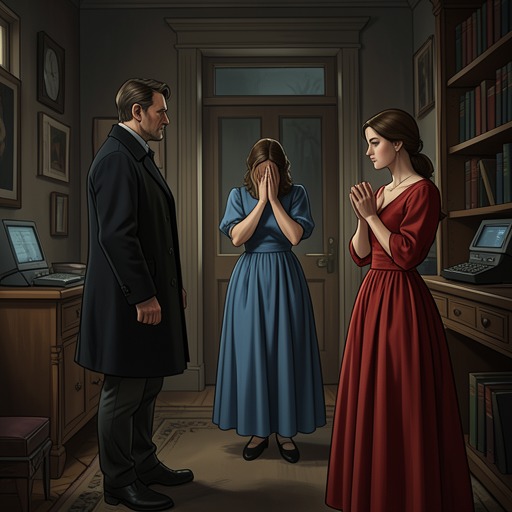
Police seize Hildred in Wilde’s apartment. [Hawberk](entity:character-recall-character-hawberk-69833c9c4dca), Louis, and the weeping Constance are present, and Hildred interprets them as usurpers who have stolen his throne. His imperial narrative has become inseparable from violence, paranoia, and institutional confinement.
the following day
Hildred Dies in the Asylum
An editor’s note reports that Hildred dies in the Asylum for Criminal Insane. His proposed empire never exists outside his delusion, leaving the King in Yellow’s imagined mythology as the force that has consumed his identity and life.
before Geneviève’s illness
Boris Demonstrates Petrification
[Boris Yvain](entity:character-recall-character-boris-yvain-96d40222ede1) shows [Alec](entity:character-recall-character-alec-52e7251f3287) a chemical solution that turns a living Easter lily and a goldfish into flawless marble. The discovery fascinates the artists but alarms Boris, who recognizes that its power could corrupt art and science if made public.
before Geneviève’s illness
Alec’s Hidden Love
[Alec](entity:character-recall-character-alec-52e7251f3287) lives in close artistic companionship with Boris, [Geneviève](entity:character-recall-character-genevi-ve-e2fd818949cf), and [Jack Scott](entity:character-recall-character-jack-scott-86500fcb1dbb) while secretly loving Geneviève. Geneviève loves Boris more deeply, and Alec’s outward loyalty becomes a mask for a pain he refuses to acknowledge.
after Boris’s discovery
Geneviève Falls Ill
[Alec](entity:character-recall-character-alec-52e7251f3287) finds [Geneviève](entity:character-recall-character-genevi-ve-e2fd818949cf) feverish and intermittently delirious after an evening in which he startled her from sleep. Her illness exposes an emotional crisis within the household, while Alec’s mind fills with images from [The King in Yellow](entity:character-recall-character-the-king-in-yellow-069ac20e6338) and the haunted landscapes of [Carcosa](entity:location-recall-location-carcosa-6d4efe655bfa).
during the fever
Geneviève Confesses
In delirium [Geneviève](entity:character-recall-character-genevi-ve-e2fd818949cf) speaks [Alec](entity:character-recall-character-alec-52e7251f3287)’s name and reveals that she loves him, shattering the old balance among the three friends. Boris responds with compassion rather than accusation, but the confession makes their former intimacy impossible to sustain.
after a prolonged illness
Alec Recovers
[Alec](entity:character-recall-character-alec-52e7251f3287) becomes severely ill under the strain of concealed love and the revelation. During delirium he repeatedly feels responsible for protecting Boris and [Geneviève](entity:character-recall-character-genevi-ve-e2fd818949cf), while visions of [Carcosa](entity:location-recall-location-carcosa-6d4efe655bfa), the [Lake Hali](entity:location-recall-location-lake-hali-71624af7af91), and the King in Yellow mingle with fragments of ordinary memory.
during Alec’s convalescence
Boris and Geneviève Die
[Jack Scott](entity:character-recall-character-jack-scott-86500fcb1dbb) tells [Alec](entity:character-recall-character-alec-52e7251f3287) that [Geneviève](entity:character-recall-character-genevi-ve-e2fd818949cf), drugged and mentally distraught, entered Boris’s solution pool and died. Boris then shoots himself through the heart, and Jack destroys the formula, records, bottles, and other evidence to prevent the petrifying discovery from surviving.
immediately after the deaths
Boris Leaves the Marbles
Boris’s will leaves the house and its affairs to [Geneviève](entity:character-recall-character-genevi-ve-e2fd818949cf), then to [Alec](entity:character-recall-character-alec-52e7251f3287) if she dies childless, while his own sculptures go to Alec. Alec receives the inheritance as both a material trust and a permanent memorial to the destroyed household.
the next morning, after the deaths
Alec Travels East
Unable to remain in the silent house, [Alec](entity:character-recall-character-alec-52e7251f3287) leaves [Paris](entity:location-recall-location-paris-c02b439ce220) and travels through the East for two years. His correspondence with Jack slowly returns to the subject of Boris and [Geneviève](entity:character-recall-character-genevi-ve-e2fd818949cf), while Jack reports recurring dreams and an oppressive sense of expectation.
two years after the deaths
Geneviève Awakens
[Alec](entity:character-recall-character-alec-52e7251f3287) returns to Boris’s house and enters the marble room, where [Geneviève](entity:character-recall-character-genevi-ve-e2fd818949cf) appears to lie petrified beneath the Madonna. A live rabbit and living fish then replace marble specimens, and the Easter lily becomes fresh again, revealing that Boris’s solution has reversed its effect.
one Sunday afternoon
The Organist’s Malignity
A narrator resting in the [Church of St. Barnabé](entity:location-recall-location-church-of-st-barnab-0c0c4476160a) hears the organist play music that seems to hunt something through the instrument. He sees the organist pass twice in impossible succession and then feels a look of hatred directed at him.
the same Sunday afternoon and evening
The Dragon Court Pursuit
After leaving the church, the narrator repeatedly encounters the pale organist throughout [Paris](entity:location-recall-location-paris-c02b439ce220) and becomes convinced that the figure is pursuing his soul. At the [Court of the Dragon](entity:location-recall-location-court-of-the-dragon-f730b419a178), the gates appear to close around him as the pursuer advances through darkness.
at the pursuit’s climax
Carcosa Revealed
The narrator realizes that the pursuit has occurred within his soul rather than in ordinary [Paris](entity:location-recall-location-paris-c02b439ce220). The church dissolves into a cosmic vision of black stars, the [Lake Hali](entity:location-recall-location-lake-hali-71624af7af91), and [Carcosa](entity:location-recall-location-carcosa-6d4efe655bfa), while the King in Yellow whispers a warning about falling into the hands of the living God.
early in the Yellow Sign story
The Watchman Appears
Mr. Scott notices a repulsive young watchman near the church beside his studio. The man’s corpse-like face produces an immediate physical revulsion, and [Tessie Reardon](entity:character-recall-character-tessie-reardon-f875bc776dae) recognizes him as the driver from a recurring dream of a black-plumed hearse.
the following morning
The Watchman’s Finger
A bell-boy recounts striking the watchman and feeling one of his fingers come away in his hand, though the watchman did not react. Mr. Scott confirms that the watchman’s middle finger is missing, turning Tessie’s dream into a disturbing physical mystery.
shortly after the watchman’s finger is seen
Tessie Declares Love
While discussing their shared hearse dreams, Tessie admits that she cares for Mr. Scott. He responds impulsively by kissing her, accepting a relationship whose moral and emotional consequences he has not fully considered.
the next day
The Yellow Sign Clasp
Tessie gives Mr. Scott a black onyx clasp marked with an unknown golden symbol that she found near the Aquarium. He later recognizes the symbol as the Yellow Sign, the object that links the dreams, the watchman, and the malignant supernatural force closing around them.
after Mr. Scott injures both wrists
The Book Is Found
Unable to paint, Mr. Scott discovers a copy of [The King in Yellow](entity:character-recall-character-the-king-in-yellow-069ac20e6338) on a high shelf, although he does not know how it entered his rooms. Tessie takes the book despite his warning, opens the second part, and is visibly struck by its power.
the same rainy day
The Couple Reads the Play
Mr. Scott reads the forbidden book after Tessie, and the two discuss its mysteries until night. They speak of the King, [Hastur](entity:character-recall-character-hastur-f6c90d814b1c), [Cassilda](entity:character-recall-character-cassilda-ae6bc3629e57), the Hyades, and the [Lake Hali](entity:location-recall-location-lake-hali-71624af7af91), becoming mentally bound by the revelation and unable to discard the Yellow Sign.
near midnight, the same day
The Hearse Arrives
A black-plumed hearse stops outside Mr. Scott’s rooms. The dead watchman enters despite locked doors, tears the Yellow Sign from Scott’s coat, and strikes him, while Tessie’s spirit flees in the encounter.
immediately afterward
The Watchman’s Corpse Found
People rush into the room after the scream and find Tessie dead, Mr. Scott dying, and the watchman’s decomposed body on the floor. The doctor declares that the watchman must have been dead for months, leaving the supernatural explanation beyond ordinary investigation.
late nineteenth century, before the Château encounter
Philip Loses His Way
[Philip](entity:character-recall-character-philip-f89be33d583c) becomes lost on the desolate moors near [Kerselec](entity:location-recall-location-kerselec-8c5c9151fc91) while shooting. As evening approaches, he realizes that the apparently gentle landscape contains valleys, swamps, and distances that defeat ordinary navigation.
the same evening
Jeanne Finds Philip
[Philip](entity:character-recall-character-philip-f89be33d583c) encounters Jeanne d’Ys carrying a falcon and a hare. She explains that the moors are easy to enter but difficult to leave, then offers him food and shelter at Château d’Ys with an old-world grace that seems to belong to another age.
that evening
Arrival at Château d’Ys
Jeanne leads [Philip](entity:character-recall-character-philip-f89be33d583c) across a drawbridge into the fortified Château d’Ys, where falconers and hounds receive them. She offers him a ceremonial cup of welcome, and Philip accepts the hospitality that begins their extraordinary attachment.
the following morning
Philip Meets Jeanne’s World
[Philip](entity:character-recall-character-philip-f89be33d583c) awakens in medieval clothing and meets Jeanne in the castle garden. She explains that she has lived almost entirely within the moorland with her nurse and falconers, reading ancient books and knowing little of the outside world.
the same morning
Philip and Jeanne Fall in Love
Jeanne and [Philip](entity:character-recall-character-philip-f89be33d583c) exchange declarations of love while she teaches him the language and practice of falconry. Their affection feels immediate and reciprocal, and Philip agrees to stay a week and return frequently after going back to [Kerselec](entity:location-recall-location-kerselec-8c5c9151fc91).
during Philip’s stay
The Viper Strikes
A viper appears among Jeanne’s falcons, and Jeanne fears for [Philip](entity:character-recall-character-philip-f89be33d583c)’s safety. The snake bites his ankle as he embraces her; he kills it, but poison overcomes him while Jeanne holds him.
after the viper bite
Jeanne’s Centuries-Old Death
[Philip](entity:character-recall-character-philip-f89be33d583c) awakens amid the ruins of the castle, with Jeanne and the falconers gone. A shrine identifies Jeanne d’Ys as having died in 1573 for love of a stranger named Philip, while her glove remains inexplicably warm and fragrant on the stone.
early in the Street of the Four Winds story
Severn Welcomes the Cat
[Severn](entity:character-recall-character-severn-f7c1f236f9bf), a solitary artist, admits a starving, diseased cat into his studio and feeds it. He observes that the animal wears a rose-coloured garter with a silver clasp, an intimate object that suggests its owner is a woman of unusual circumstances.
the following evening
The Cat Leads Severn
[Severn](entity:character-recall-character-severn-f7c1f236f9bf) learns that the cat belongs to [Sylvia Elven](entity:character-recall-character-sylvia-elven-0711e10ef895), who lives in the neglected north wing of the same building. Intrigued by the name Sylvia and by the garter, he follows the animal through the corridors to a closed chamber.
that night
Severn Finds Sylvia Dead
Inside the chamber [Severn](entity:character-recall-character-severn-f7c1f236f9bf) discovers a luxurious room and Sylvia’s discarded clothing. He opens the bed curtains and finds Sylvia pale, smiling, and dead; he kisses her, while the cat purrs through the night.
during the Siege of Paris
Jack and Sylvia Endure the Siege
[Jack Trent](entity:character-recall-character-jack-trent-6d400f62d930) and [Sylvia Trent](entity:character-recall-character-sylvia-trent-6de3408bbcd6) live together in the starving, shell-battered [Latin Quarter](entity:location-recall-location-latin-quarter-6c354221a51e). Their domestic life is shaped by hunger, artillery, rumors, and Sylvia’s growing fear whenever Jack leaves the apartment.
during the siege, before the sortie
Trent Helps His Friends
Trent shares money and food with [Braith](entity:character-recall-character-braith-8213c71a38b2), [Fallowby](entity:character-recall-character-fallowby-cd4e22f76e12), [West](entity:character-recall-character-west-6fa1620de71d), and Colette despite their pride and poverty. West steals a chicken from a wealthy banker for the starving artists, while Trent insists that friendship requires material sacrifice during the crisis.
during the siege
West Denounces Hartman
[West](entity:character-recall-character-west-6fa1620de71d) confronts [Hartman](entity:character-recall-character-hartman-09009bc6ce11) for hoarding food, exploiting public resources, and associating with suspected spies. The quarrel becomes physical, and West warns Hartman that the city may treat his behavior as treason.
the evening before the sortie
Hartman Is Arrested
The [American Legation](entity:organization-recall-organization-0bad763adfc0) informs Trent that [Hartman](entity:character-recall-character-hartman-09009bc6ce11) has been arrested after incriminating papers and food fraud are discovered. Though Hartman claims American citizenship and artistic status, the authorities intend to shoot him if his case is confirmed.
the same night
Sylvia Reveals Her Secret
After [Hartman](entity:character-recall-character-hartman-09009bc6ce11)’s arrest is announced, Sylvia confesses that she had been involved with him before marrying Trent and that Hartman has a child who depends on him. She begs Trent to save Hartman for the child’s sake, exposing the marriage’s hidden moral burden.
four in the morning
Trent Identifies Hartman
Trent goes to the prison and identifies [Hartman](entity:character-recall-character-hartman-09009bc6ce11) as an American artist, preventing immediate execution. He privately asks [Captain Southwark](entity:character-recall-character-captain-southwark-123cae750bf6) to retrieve Hartman’s child and bring it to Trent’s apartment if Hartman is later shot.
the following dawn
Trent Joins the Sortie
Unable to return directly to Sylvia, Trent is swept into the departing French forces and volunteers as a soldier. He joins the march beyond [Paris](entity:location-recall-location-paris-c02b439ce220), driven by a need for action and escape from the moral crisis inside his marriage.
the same day
Battle in the Fog
Trent’s battalion advances through fog, artillery, and close combat. He kills an enemy soldier with a bayonet, witnesses officers and comrades fall, and becomes engulfed in the physical horror he had sought as a release from private despair.
during the battle’s aftermath
Hartman Is Executed
As the defeated forces return through [Paris](entity:location-recall-location-paris-c02b439ce220), Colette and [West](entity:character-recall-character-west-6fa1620de71d) witness [Hartman](entity:character-recall-character-hartman-09009bc6ce11) being led across the barracks square and hear the firing squad’s volley. The execution confirms that the besieged city’s justice has become inseparable from desperation and collective violence.
the night after the sortie
Trent Returns Home
Trent reaches his ruined apartment and finds Sylvia alive amid the shell damage. Their child is beside her, and Sylvia explains that the child was brought to them; Trent accepts the infant as theirs, turning concealed betrayal into a renewed family bond.
early in the Street of Our Lady of the Fields story
Hastings Enters Paris
[Reverend Joel Byram](entity:character-recall-character-reverend-joel-byram-a2ddf771c981) places [Hastings](entity:character-recall-character-hastings-029f205dc92e) in a respectable pension on the [Street of Our Lady of the Fields](entity:location-recall-location-street-of-our-lady-o-df449e53d927), warning him against the [Latin Quarter](entity:location-recall-location-latin-quarter-6c354221a51e) and its supposed immorality. Hastings is homesick but eager to begin studying art in [Paris](entity:location-recall-location-paris-c02b439ce220).
a few days after arriving
Hastings Meets Valentine
In [Luxembourg Gardens](entity:location-recall-location-luxembourg-gardens-4e0becc48c29) [Hastings](entity:character-recall-character-hastings-029f205dc92e) meets [Valentine Tissot](entity:character-recall-character-valentine-tissot-945c67e75a54), whom [Foxhall Clifford](entity:character-recall-character-foxhall-clifford-8e96be295844) has introduced without explaining her identity. Hastings mistakes her for an art student or respectable young woman, while Valentine is charmed and troubled by his innocence.
during their first meeting
Valentine Requests Secrecy
Valentine tells [Hastings](entity:character-recall-character-hastings-029f205dc92e) that her parents are dead and refuses to receive him at her home. She asks him not to speak about her to Clifford or anyone else, preserving the mystery that separates her public persona in the [Latin Quarter](entity:location-recall-location-latin-quarter-6c354221a51e) from the pure image Hastings has formed.
shortly afterward
Clifford Protects Hastings
At the studio, Clifford defends [Hastings](entity:character-recall-character-hastings-029f205dc92e) against Laffat’s cynical insinuations about women and Parisian life. Clifford and Elliott recognize that Hastings’s moral innocence makes him vulnerable, and Clifford resolves not to expose Valentine before Hastings is ready.
after Hastings meets Valentine
Clifford’s Double Life
Clifford arranges a secret meeting with Valentine while Elliott criticizes his serial affairs and demands that he attend the group’s social plans. Clifford’s divided conduct shows the contrast between the reckless [Latin Quarter](entity:location-recall-location-latin-quarter-6c354221a51e) world and [Hastings](entity:character-recall-character-hastings-029f205dc92e)’s idealized moral imagination.
during the meeting at Mignon’s
Valentine Rejects Exposure
Valentine admits that she fears [Hastings](entity:character-recall-character-hastings-029f205dc92e) will reject her if he learns the truth about her life in the Quarter. Clifford promises not to warn him, accepting her appeal despite knowing that her secrecy cannot last indefinitely.
about a month after their first meeting
Hastings and Valentine Escape
[Hastings](entity:character-recall-character-hastings-029f205dc92e) encounters Valentine at [Luxembourg Gardens](entity:location-recall-location-luxembourg-gardens-4e0becc48c29) and persuades her to spend the entire day with him. They eat together, travel by train toward the country, and briefly experience a world beyond the city’s social judgments.
during the train journey
Hastings Kisses Valentine
As the train rushes through the countryside, [Hastings](entity:character-recall-character-hastings-029f205dc92e) embraces and kisses Valentine. She protests that she is unworthy and has promised herself to another, but his innocent love overcomes her resistance, and she accepts happiness she has never previously known.
later that spring
Selby Meets Clifford
[Selby](entity:character-recall-character-selby-977433eb26af) arrives at Julian’s and is welcomed by Clifford despite the noisy, combative studio culture. He becomes part of the group and quickly notices the mysterious woman known as [Rue Barrée](entity:location-recall-location-rue-barr-e-e6db4c62f81f), whose reserved salute has made her an object of universal fascination.
the following Sunday
Selby Falls in Love
[Selby](entity:character-recall-character-selby-977433eb26af) sees [Rue Barrée](entity:location-recall-location-rue-barr-e-e6db4c62f81f) at the flower market and is captivated by her sadness and beauty. He buys the expensive rose bush she cannot afford, sending it anonymously with her pansies, and discovers that his curiosity has become genuine love.
the following afternoon
The Studio Mocks Selby
[Selby](entity:character-recall-character-selby-977433eb26af)’s room fills with costly flowers, alarming him when Clifford arrives and the other artists tease him from the stairs. The floral excess exposes his attachment to [Rue Barrée](entity:location-recall-location-rue-barr-e-e6db4c62f81f) before he is ready to admit it, while Clifford begins to understand the seriousness of the situation.
the following Monday
Clifford Proposes to Rue
Clifford confesses to Elliott that he truly loves [Rue Barrée](entity:location-recall-location-rue-barr-e-e6db4c62f81f) and would marry her. When she appears in [Luxembourg Gardens](entity:location-recall-location-luxembourg-gardens-4e0becc48c29), he offers her himself, his property, and his future, abandoning his usual ironic detachment in a moment of genuine emotional risk.
immediately after the proposal
Rue Rejects Clifford
[Rue Barrée](entity:location-recall-location-rue-barr-e-e6db4c62f81f) thanks Clifford but refuses his proposal. She explains that love offered to women like her often means the streets and eventual abandonment, and she will not accept a future whose passion may die into contempt.
the following month
Clifford Recovers
Clifford slowly recovers from the humiliation and emotional wound of Rue’s refusal. Her continued courteous salutes both soothe and torment him, while [Selby](entity:character-recall-character-selby-977433eb26af) remains jealous and uncertain, revealing how Rue has become the emotional center of the artists’ social world.
after a night of drinking
Selby Reaches Rue’s Street
After dining and drinking with Clifford, [Selby](entity:character-recall-character-selby-977433eb26af) wanders through [Paris](entity:location-recall-location-paris-c02b439ce220) and discovers a barrier marked [Rue Barrée](entity:location-recall-location-rue-barr-e-e6db4c62f81f). Drunk and driven by obsession, he climbs the building’s façade toward the only lighted window, turning the woman’s nickname into a literal destination.
same night, near the ending
Selby Leaves with a Rose
[Selby](entity:character-recall-character-selby-977433eb26af) enters [Rue Barrée](entity:location-recall-location-rue-barr-e-e6db4c62f81f)’s white room and confronts the purity and loneliness of her private life. Sobering, he recognizes the impossibility of his desire, accepts a rose from her, and leaves through the wicket without trying to possess her.